A More Realistic Way to Practice Minimalism
Motivation arrived with that very specific edge that comes from being slightly annoyed at yourself, convincing enough to believe full minimalism could be achieved in a single afternoon with the right amount of effort. The plan was ambitious and honestly kind of sweet. Declutter the entire apartment. Donate half of everything. Finally become the kind…
Motivation arrived with that very specific edge that comes from being slightly annoyed at yourself, convincing enough to believe full minimalism could be achieved in a single afternoon with the right amount of effort.
The plan was ambitious and honestly kind of sweet. Declutter the entire apartment. Donate half of everything. Finally become the kind of person who doesn’t maintain a mysteriously multiplying “random stuff” pile, despite clear evidence to the contrary, like holding onto three nearly empty hand creams just in case.
Momentum lasted right up until a cabinet door opened. Out came a pile of unrelated objects, and with it, that familiar mental shift where motivation quietly turns into overwhelm. The energy drained fast.
The minimalist fantasy disappeared on the spot. What remained was the real version of the moment, standing still with a rubber band, an expired coupon, and a lone earring, as if they were clues in a mystery that didn’t need solving.
The lesson was simple and oddly relieving: realistic progress beats dramatic resets. The smallest system you can actually finish is the one that creates change, not the grand plan that never makes it past the first cabinet.
Why I Wanted Minimalism So Badly in That Moment
Minimalism looks like peace from the outside, and I think that’s why I crave it on days when my brain feels loud, because less stuff seems like it would mean fewer decisions, fewer messes, and fewer ways to feel behind.
The problem is that I sometimes treat minimalism like a personality upgrade instead of a set of boundaries, and when you treat it like an instant transformation, you end up pushing too hard, then quitting, then feeling like you failed at something you weren’t even doing realistically.
I wasn’t actually trying to be a minimalist, I was trying to feel calm, and calm is something you can build without turning your whole home into a blank showroom.
When My Declutter Plan Started Eating My Afternoon
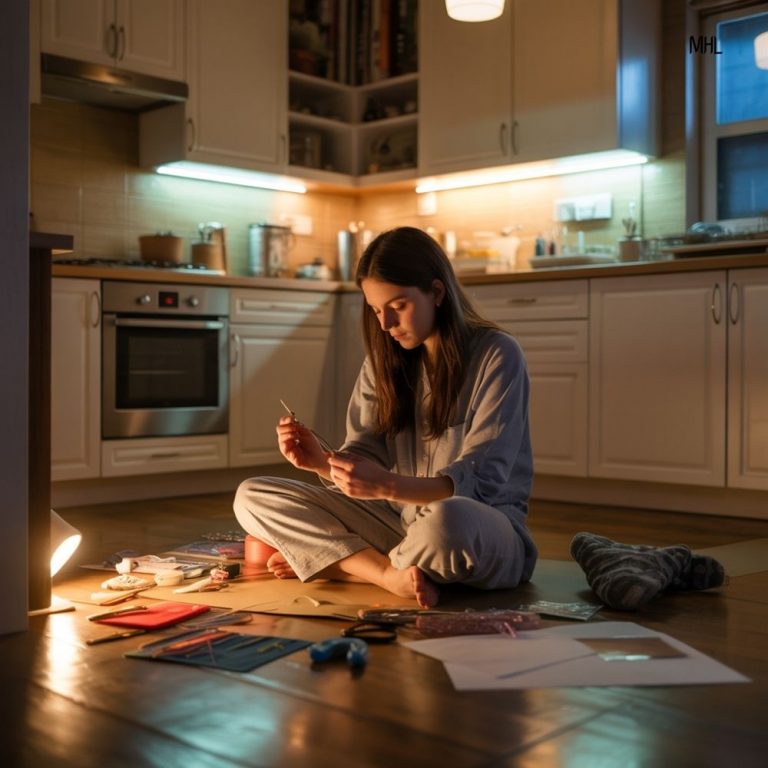
The moment I knew I was in trouble was when I pulled everything out of a cabinet “to sort it”. Suddenly, my counter was covered in little objects that didn’t have a category, and once I hit the “miscellaneous” stage, I end up sitting on the floor for forty minutes deciding whether a jar lid is “useful” or “trash.”
I had that split second of panic where I realized I could either keep going and wreck my whole apartment, or I could choose one small area, finish it, and let that be enough for today.
The dramatic reset version of me wanted to keep pushing, but the version of me that has cleaned up enough messes to learn a lesson chose the second option, because I didn’t need a minimalist identity, I needed a win I could complete.
So I picked one drawer. One drawer felt almost embarrassingly small compared to my fantasy plan, but it was also the first decision that actually sounded doable.

What I Used (and What You Can Substitute)
I didn’t go buy fancy organizers, because that would defeat the entire point of doing something small and realistic, so I used what I had, which is the Millie way.
Materials
- A trash bag and a donation bag
- A damp cloth or wipe for cleaning
- Small boxes or containers (shoe boxes, old gift boxes, takeout containers, or small bins)
- Painter’s tape and a marker for quick labels (optional but helpful)
- A timer
The Drawer System That Actually Works in Real Life
This is the system I use when I want a drawer to stay organized without requiring me to become a different person, and the message is built into the steps because each step is small, finishable, and forgiving.
Step 1: Set a Timer So You Don’t Turn It Into a Lifestyle Project
I set a timer for 20 minutes, not because it always takes exactly 20 minutes, but because a timer makes the task feel safe. When I tell myself I’m only doing this for 20 minutes, my brain stops panicking about losing the whole day, and I can actually start.
Step 2: Pull Everything Out, but Only From the Drawer
I emptied the drawer completely and put everything on a towel, then I wiped the inside of the drawer with a damp cloth, because cleaning the space is a psychological reset, and it makes you more willing to put things back neatly.
I also noticed crumbs, a hair tie, and a random screw, which was a very on-brand discovery and also the moment I remembered why this drawer had been stressing me out.
Step 3: The Three-Pile Sort That Stops the Overthinking Spiral
Instead of creating seven categories and getting stuck, I did three piles, because three piles are enough to make progress without turning the process into a debate.
- Keep and belongs here
- Keep but belongs somewhere else
- Trash or donate
This is where the message shows up again, because “realistic progress” is often just choosing fewer decisions. When you have too many categories, you get tired, and when you get tired, you shove everything back in and call it a day, which is exactly what we’re trying not to do.
Step 4: The “Prime Real Estate” Rule
Before I put anything back, I decided what deserved the easiest access, because drawers work best when the most-used items live in the front and center, and the least-used items live in the back or get removed entirely.
I asked myself one simple question for each item: “Would I reach for this without thinking?” If the answer was yes, it got prime real estate. If the answer was no, it either went to the back, moved to a better home, or left the apartment.
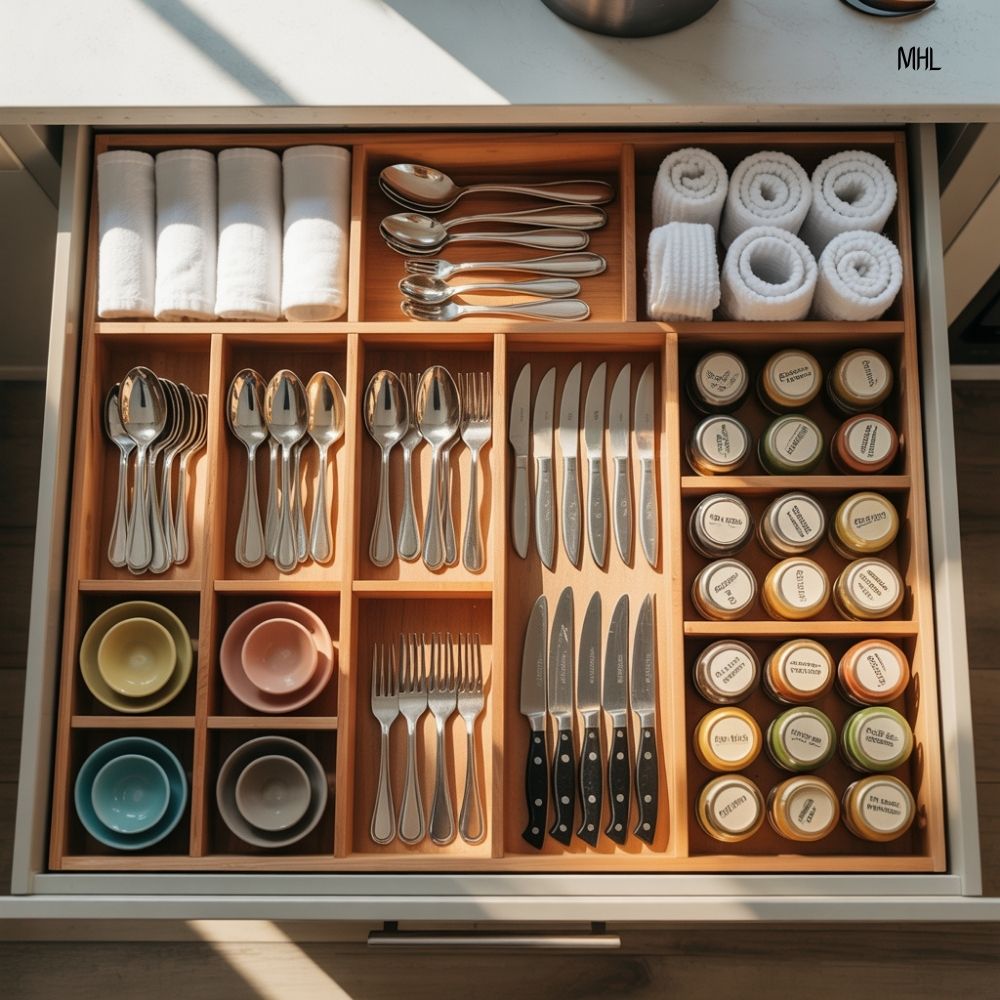
Step 5: The Box Divider Hack That Makes Any Drawer Look Organized
I used small boxes as dividers, and I didn’t worry about them matching, because the drawer is closed most of the time and my goal was function, not a magazine spread. I placed boxes like little zones inside the drawer, and I made the zones based on what I actually use, not what looks pretty.
For example, if it was a kitchen junk drawer, I would do zones like:
- batteries and small tools
- scissors and tape
- pens and sticky notes
- random but important items like spare keys or command hooks
If it was a bathroom drawer, I would do:
- daily items
- backups
- tiny items like hair ties and clips
The hack is that boxes stop items from migrating, because loose items always slide around and become a mess, and once it’s a mess, you stop maintaining it, and once you stop maintaining it, you feel like you’re failing again.
Step 6: The “One-In, One-Out” Promise That Makes It Stay That Way
This is the part that keeps the system from collapsing, and it’s also the most realistic minimalism rule I’ve ever followed.
For this drawer, I made a simple agreement with myself: if I add something new, I remove one thing. It doesn’t have to be dramatic, and it doesn’t have to be perfect, but it keeps the drawer from slowly turning back into a chaos pocket.
I also put a tiny label on one box using painter’s tape, because labels reduce friction, and friction is the enemy of maintenance, especially on tired days.
The Part That Made Me Laugh, and the Part That Made Me Feel Better
When I finished, the drawer was calm in a “I can open this without stress” way, and honestly, that is what I wanted all along. I realized that my desire for minimalism had less to do with getting rid of everything and more to do with wanting my home to stop yelling at me through clutter.
One drawer didn’t change my entire life, but it changed my day, because it gave me a finished win, and finished wins build momentum in a way that half-started dramatic resets never do.
I thought the only progress that counted was big progress, and I was wrong, because realistic progress is the only kind that stays.
The Message
If you want to be a minimalist, or if you just want to feel calmer in your space, you don’t have to start with your whole home, and you don’t have to purge your life to earn peace.
You can start with one drawer, build one simple system, and let that be enough for today, because the point isn’t to become a different person overnight, the point is to make your real life easier to live in.
A dramatic reset can feel exciting, but a small system can actually stick, and the small system is what changes your week.
If you had to pick one drawer to organize right now, which one would it be, and what is the weirdest thing you think you’d find in it, because I am still thinking about that random screw like it was a tiny symbol of who I am as a person.