A Night Project That Turned Into a Very Useful Boundary
I started a “quick” project at 8 p.m. because I had that sneaky evening energy that feels like motivation but is actually just restlessness dressed up as productivity. I told myself I was only going to do one small thing. If you are familiar with Millie math, you already know what happened next, because “one…
I started a “quick” project at 8 p.m. because I had that sneaky evening energy that feels like motivation but is actually just restlessness dressed up as productivity. I told myself I was only going to do one small thing.
If you are familiar with Millie math, you already know what happened next, because “one small thing” turned into me sitting on the kitchen floor with a foam roller in one hand and cereal in a mug in the other, bargaining with myself about how late is too late to keep going.
The project wasn’t even dramatic, which is what makes it funnier, because it was the kind of simple makeover that should have been calm, except my brain decided it was a race, and I stopped hearing my body’s very reasonable requests for sleep.
I kept going because I didn’t want to stop mid-step, and I kept telling myself I would stop after the next tiny task, and then I looked at the clock and realized I had turned my night into a sprint for no reason.
Boundaries are not what you do after you finish, boundaries are part of how you finish.
The Moment I Realized “Quick” Was a Trap Word for Me
I don’t know what it is about evenings, but after dinner my brain starts acting like it finally has time to become a better version of me. The problem is that my evening brain doesn’t fully understand time.
It thinks sanding will take ten minutes even though sanding turns into wiping dust, and wiping dust turns into finding a chip, and finding a chip turns into filling it, and filling it turns into waiting for it to dry. Suddenly, you are deep in a project that now requires patience, not enthusiasm.
That night I was trying to fix up a small piece, and I told myself I’d just do the prep, but prep is the part that opens the door that I want to walk through it and finish.
That anxiety is exactly what keeps me up, because I start believing the only options are “finish everything” or “you failed,” which is not true, but it feels true at 10 p.m. when you are tired and stubborn.
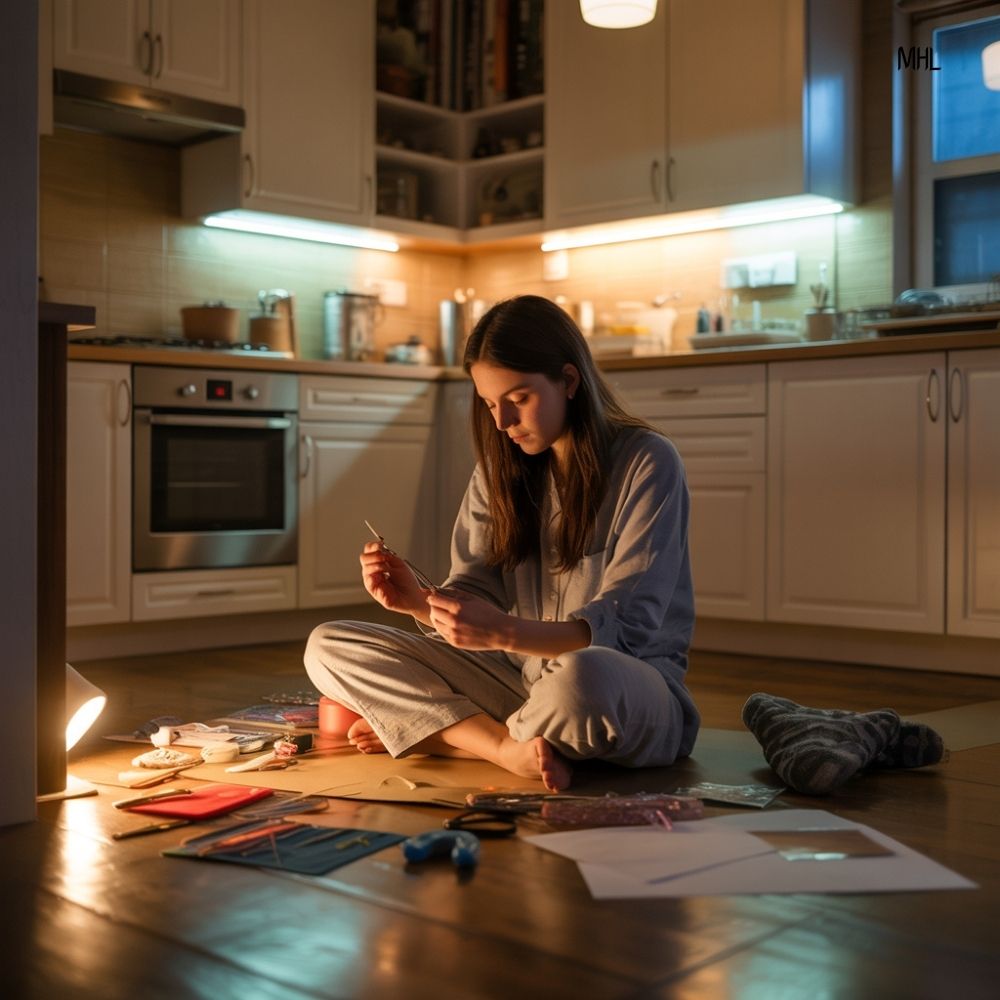
Here’s the Part I Messed Up, So You Don’t Have To
I started without a stopping plan, and that was my mistake, because when you start a project at night, the stopping plan matters more than the starting plan. I didn’t set a timer, I didn’t choose a clean pause point, and I didn’t prep my supplies in a way that would make stopping easy.
I also made the classic error of thinking, “I’ll stop when I feel tired,” even though I know I don’t feel tired until I’ve crossed into the zone where everything feels irritating and I start making sloppy decisions.
If you’re going to do evening projects, you have to stop before the sloppy zone, because the sloppy zone is where you spill paint, rush sanding, and wake up annoyed at yourself.
That is when I realized I needed a system for pausing projects cleanly, because boundaries are easier to keep when you don’t rely on willpower alone.
The Message That Changed My Evening Projects Forever
I used to think boundaries were what organized people had. I thought if I had boundaries, I’d lose my creative momentum, but what I’ve learned is that boundaries are how I protect my momentum so I can keep creating tomorrow.
The project will wait, but my energy won’t, and the version of me I’m trying to be is the one who finishes things without sacrificing sleep like it’s a hobby. So I built a “pause it cleanly” system, and I use it anytime I realize it’s getting late or my mood is turning brittle.
My “Pause It Cleanly” System So You Can Stop Without Ruining Tomorrow
This is the exact system I use, and it’s designed for real life, which means it’s simple, fast, and it doesn’t require you to be perfectly organized.
Step 1: Choose a Clean Pause Point, Not a Random Stop
A clean pause point is a point where the project is stable, not sticky, and not halfway through a step that will harden into regret. If I’m painting, the clean pause point is after a coat is finished and the brush is cleaned, not halfway down a surface.
This is the biggest secret, because clean pause points prevent the next-day dread that makes you avoid the project.
Step 2: The 5-Minute Reset That Saves Your Future Self
I set a timer for five minutes, and I do only the cleanup that will protect tomorrow, which means I’m making the space safe and sane. I close paint lids tightly, wipe the rims so they don’t glue shut, wrap rollers in plastic if I’ll use them again within 24 hours, and put brushes in water or wash them immediately.
If I were sanding, I would wipe down the piece and the surrounding area, and I would vacuum or sweep the dust, because dust is what turns into chaos if you let it sit, and chaos is what makes the project feel bigger than it is.
Step 3: Label What’s Next So You Don’t Lose Momentum
This is the step that makes pausing feel like progress instead of quitting, because it keeps your brain from waking up confused.
I write a tiny note on painter’s tape and stick it directly on the project or on the paint can, something like “Second coat tomorrow, foam roller, light pressure,” or “Sand 220 grit for 90 seconds, then wipe, then paint,” and I keep it short so it feels easy.
Step 4: Store Supplies Like You’re Coming Back Soon, Even If You Aren’t
Instead of putting everything away perfectly, I create a “project parking spot,” which is one bin or one bag where everything related to the project lives, and I put it somewhere visible but not in the way.
The goal is not to organize like a magazine; the goal is to make it easy to restart without digging through your whole apartment looking for the one screwdriver you swear you own.
If I’m using small hardware, I put it in a little cup or a zip bag and tape the bag to the back of the piece, because losing screws is how projects become emotional.
Step 5: Set a Realistic Stop Time, Not a Vibe-Based Stop Time
Here’s the boundary rule that saved me: if I start anything after 7 p.m., I stop by 9 p.m., and if I start after 8 p.m., I stop by 9 p.m. no matter what, because my sleep matters more than finishing one coat of paint.
That might sound strict, but it’s actually kinder, because it prevents the spiral where you keep pushing and then wake up grumpy and too tired to finish anything the next day.
My real bedtime, it turns out, isn’t when I fall asleep, it’s when I need to start winding down, and that’s the boundary I wasn’t respecting before.
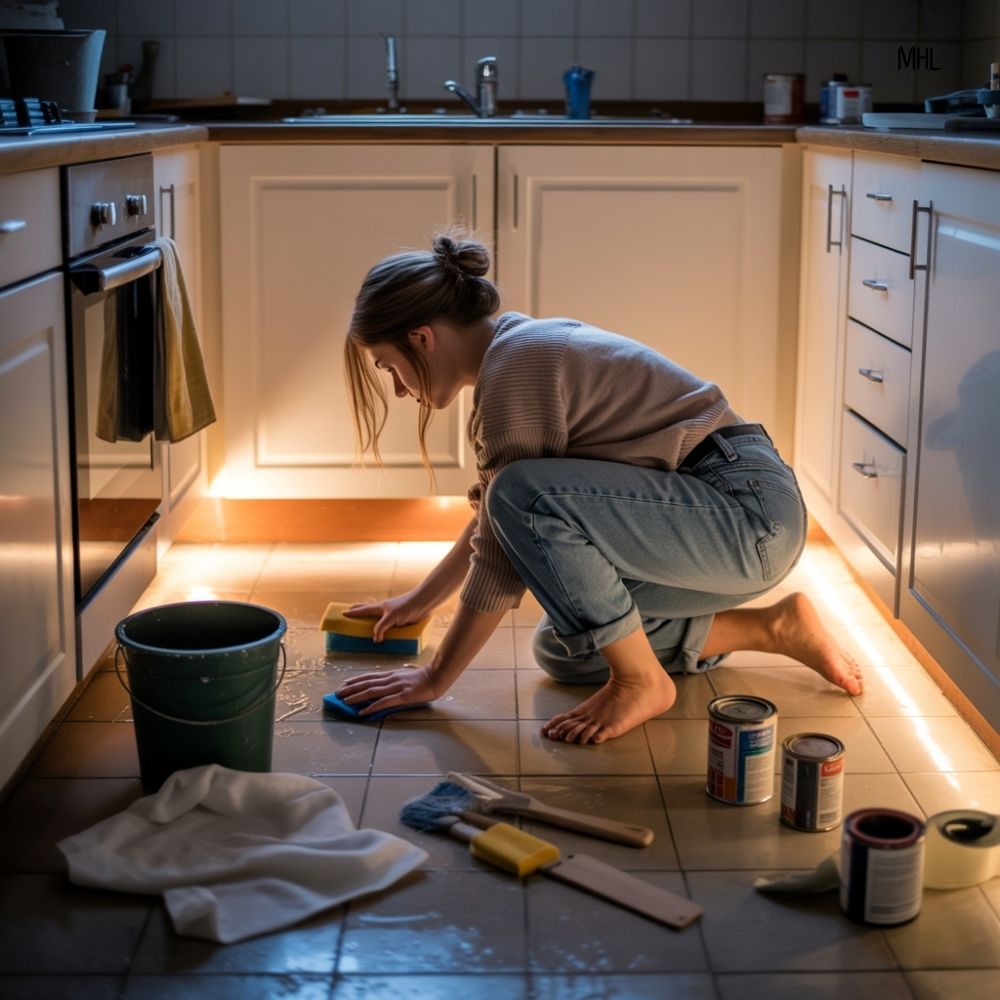
The Message, Woven Through the Whole Night
The biggest thing I learned that night is that boundaries are not a buzzkill, they are a finishing tool, because they protect your energy, your mood, and your ability to come back to the project with patience.
Every time I pause cleanly, I’m practicing the idea that I don’t have to earn rest by completing everything, and I don’t have to sacrifice tomorrow to prove I’m productive today.
It’s also a reminder that “progress” is not measured by how late you stayed up, it’s measured by whether the project is set up to continue, and whether you treated yourself like someone you want to keep showing up for.
Here’s the part I messed up, so you don’t have to, and here’s the message I’m keeping: you can love making things without letting your projects take over your life, because your time is part of the materials too.