A Very Normal Grocery Mistake and the Lesson Inside It
A grocery list was made with real intention this time. Not the casual, optimistic kind that lives only in your head, but an actual written list. An hour later, bags of perfectly reasonable groceries came home, somehow missing the one item everything else depended on. It wasn’t a fun extra that got skipped. It was…
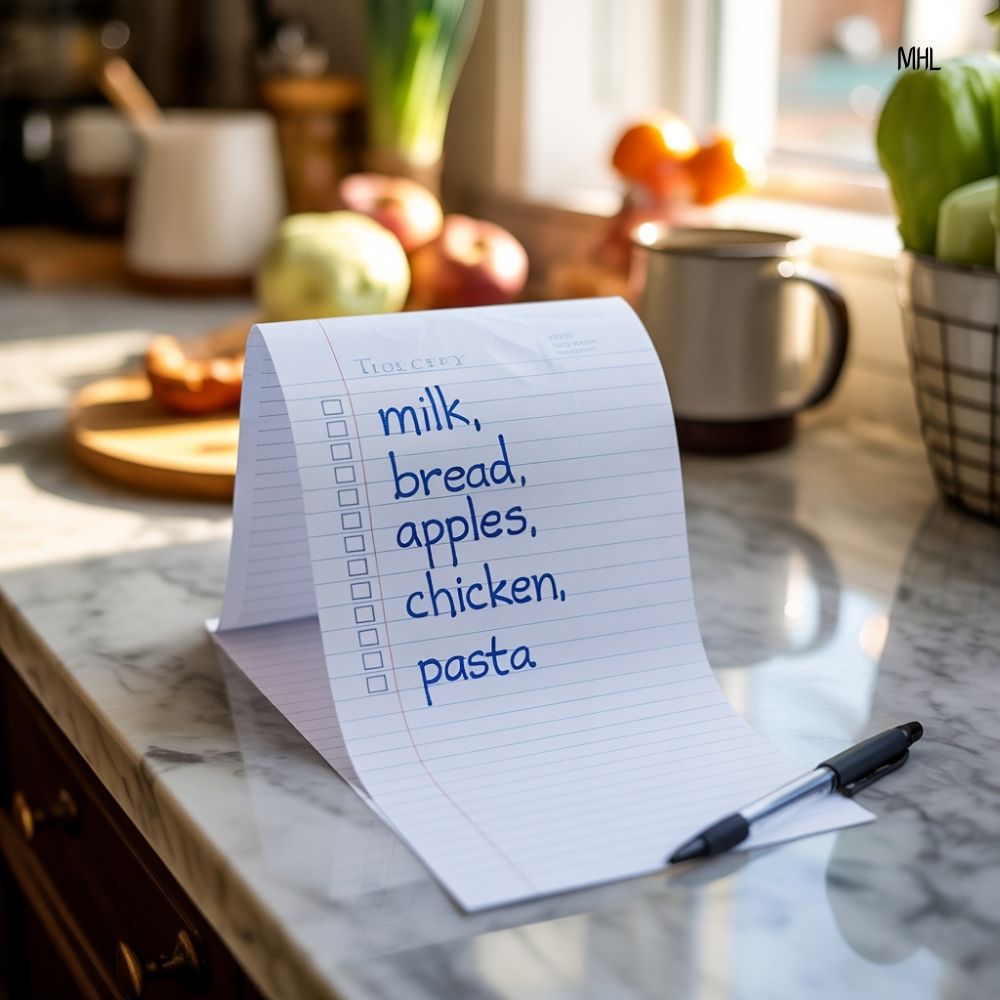
A grocery list was made with real intention this time. Not the casual, optimistic kind that lives only in your head, but an actual written list. An hour later, bags of perfectly reasonable groceries came home, somehow missing the one item everything else depended on.
It wasn’t a fun extra that got skipped. It was the core ingredient, the thing the entire dinner plan quietly revolved around, which made the discovery funny in the most irritating way possible.
Everything was unpacked. The list was checked. The bags were checked again. Then came that slow, sinking realization. There it was, written clearly on the list, unchecked and patient, like it had been waiting politely the whole time.
The familiar urge to get annoyed showed up, because that’s an easy reaction when energy is low. But something else surfaced instead, something worth holding onto: forgetting one thing doesn’t mean you’re failing. It means you’re human. Brains glitch. Plans wobble. None of that is proof that you’re doing life wrong.
Why Forgetting One Thing Can Feel Weirdly Personal
If you’ve ever forgotten the one thing you needed, you know it doesn’t just feel like forgetting; it feels like a small betrayal of your own effort, because you did the planning, you did the list, you did the trip, and you still ended up with a missing piece.
For me, the forgetting always happens when I’m mentally multitasking, like when I’m thinking about work, bills, chores, or the fact that I need to text someone back, and my brain starts treating the grocery store like a background task.
That’s how you end up standing in aisle five staring directly at the shelf where the item lives and still not registering that it’s the thing you came for, because your eyes are there but your brain is somewhere else.
The message matters here because self-kindness isn’t a motivational quote, it’s a practical tool, and it helps you recover faster, which is the only thing that actually improves life.
The Grocery Trip That Looked Successful Until It Didn’t
I walked into the store with my list on my phone, and I told myself I was going to be efficient. I grabbed the basics, I hit produce first, and I even remembered something I hadn’t written down, which made me feel extra capable, like I had achieved grocery enlightenment.
Then I got distracted in the most Millie way possible, because I wandered into the seasonal aisle and suddenly I was holding a discounted candle like it had called my name.
I justified it, of course, because I told myself it was self-care and technically useful, and the candle may have been lovely. It was also a tiny detour that broke my focus.
Once my focus breaks, I start doing grocery store math like “I’m already here, so I might as well,” which is how you end up with tortilla chips and no tortillas.
I checked my list a few times, but not with the attention it deserved, and that’s the detail that mattered, because the list wasn’t the problem, my attention was.
Here’s the Part I Messed Up, So You Don’t Have To
I treated the list like it would do the work for me. I know that sounds silly, because I was the one holding the list, but I assumed that simply having it would prevent mistakes, and that’s not how brains work when they’re tired, overstimulated, or trying to be fast.
I kept glancing at it while also scanning shelves, navigating people, and thinking about getting home, and somewhere in that mix, my brain skipped over the one item that mattered most.
I also made the classic error of not doing a final “checkout scan” of my list before paying, because by the time you’re in line, you’re already mentally leaving, and mentally leaving is when you stop being careful.
This is where the message comes in gently but firmly, because forgetting something isn’t proof you’re failing, it’s proof you’re a human being trying to do life while your brain has other tabs open.
What I Did Next, Without Turning It Into Self-Punishment
I had two options: change dinner plans or go back out, and neither option needed to be treated like a tragedy. I looked at what I had and decided whether I could pivot, because pivoting is a life skill, and it’s often easier than forcing yourself to redo the whole trip out of guilt.
In my case, I could have swapped dinner to something else, but I really wanted the original plan, and I also didn’t want to let the mistake turn into an excuse to skip eating a real meal, because that’s another way small errors snowball.
So I chose the simplest fix: I ran back out for the one item, and I made it a tiny mission instead of a shame walk. I also left the bags unpacked on the counter, because I didn’t want to do extra work twice, and that choice is part of the message too.
Practical choices are not laziness; they’re efficiency in the real world.
The Small System I Started Using So This Happens Less Often
I’m not interested in turning grocery shopping into homework, because I already have enough systems, but I do like tiny tweaks that reduce the chances of future me getting annoyed, so I started doing two small things that feel realistic.
First, I put a star next to the one “mission-critical” item on my list, meaning the item that the whole meal depends on. Second, I do a final list scan right before checkout, and I do it slowly.
Sometimes I also group the list by store sections, not for aesthetic reasons, but because it reduces wandering, and wandering is where I get distracted by candles and random snack logic.
These are not rules that make me perfect, they’re small supports that make me more likely to succeed on a normal tired day, and that’s all I want.

The Message That Carried Through the Whole Thing
You’re not failing, you’re human, and forgetting something doesn’t erase the fact that you tried.
Making a list is still progress, even if it wasn’t perfect progress. The goal isn’t to become a flawless grocery shopper, the goal is to feed yourself and live your life without turning every mistake into a personal critique.
When you’re tired, your brain misses things, and that’s not shameful; it’s information, and the kind response is to adjust gently rather than punish yourself.
I forgot the one thing I needed, and I still made dinner, and my life was still okay, and that is the point I want to hold onto, because small mistakes don’t mean you’re falling apart, they mean you’re living.
Your Turn
What’s the one thing you always forget at the store, even when you write it down, because I need to know I’m not alone, and also because I’m genuinely curious what item is haunting other people the way mine haunted me on my kitchen counter.