Why Paint Peels Off Furniture And How to Prevent It
Paint peeling off furniture is one of those problems that feels especially frustrating because it often shows up after the work is already done. At first, everything looks smooth and finished, but after a short time, the surface starts to chip, flake, or lift in certain areas. This usually leads to the same question: what…
Paint peeling off furniture is one of those problems that feels especially frustrating because it often shows up after the work is already done. At first, everything looks smooth and finished, but after a short time, the surface starts to chip, flake, or lift in certain areas.
This usually leads to the same question: what went wrong? In most cases, peeling isn’t caused by the paint itself. It comes from small issues in preparation, application, or drying that weaken how well the paint sticks to the surface.
The good news is that once you understand what causes peeling, it becomes much easier to avoid it completely.
The Quick Fix That Actually Works
Peeling paint is usually the result of poor adhesion, which means the paint never bonded properly to the surface.
The most effective way to fix and prevent it is to:
- remove any loose or peeling paint before repainting
- prepare the surface so paint can grip properly
- apply thin, even coats instead of thick layers
- allow enough drying time between each coat
A strong finish depends more on preparation than on the amount of paint used.
What’s Really Causing the Peeling
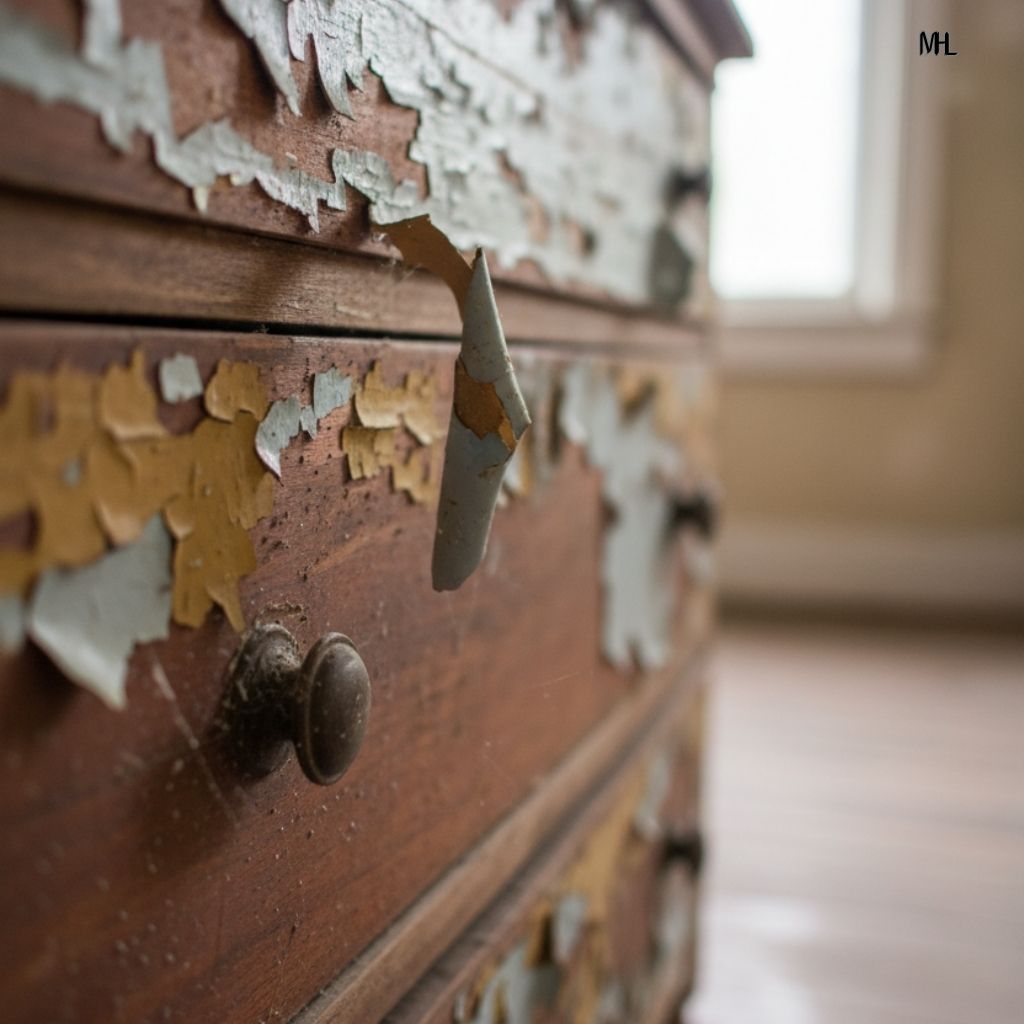
Peeling doesn’t happen randomly. It’s usually the result of one or more underlying issues that weaken how paint attaches to furniture.
One of the most common causes is painting over a surface that hasn’t been properly cleaned. Dust, grease, or residue can create a barrier that prevents paint from sticking.
Another frequent issue is skipping sanding. Smooth or glossy surfaces don’t give paint enough grip, which makes it easier for the paint to lift over time.
Moisture can also play a role. If the furniture isn’t completely dry, or if it’s exposed to humidity too soon, the paint may not adhere properly.
In some cases, incompatible products are used together. For example, applying certain paints over old finishes without a primer can lead to poor bonding. Peeling is often the result of these small factors adding up.
How to Fix Peeling Paint Step by Step
Fixing peeling paint is less about covering the problem and more about correcting the surface underneath so the new paint can properly adhere.
Step 1: Let the Surface Fully Dry
Before doing anything, the painted surface needs to be completely dry. Working on paint that is still soft or slightly damp can make the peeling worse and create a more uneven surface.
Allow enough time for the paint to harden fully, especially if the furniture has been recently painted or exposed to moisture.
Step 2: Remove All Loose or Peeling Paint
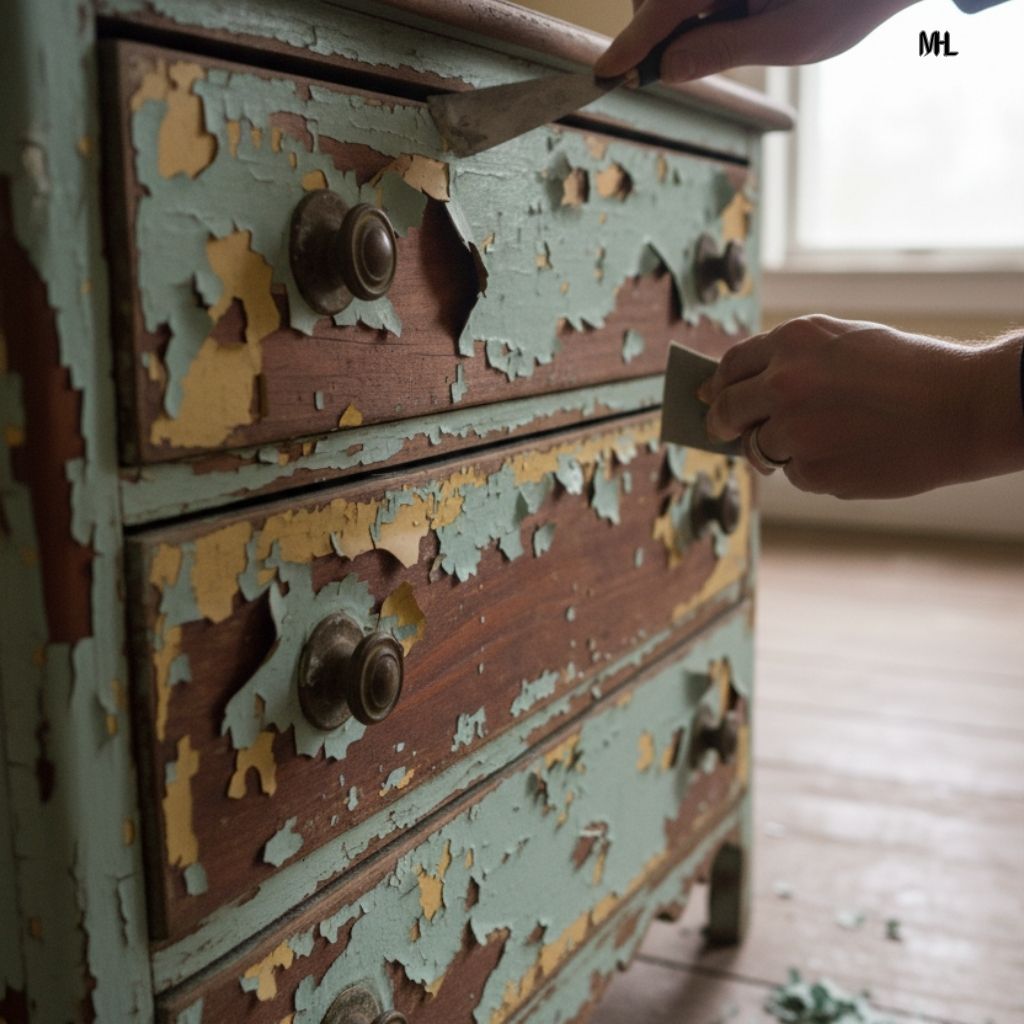
Any paint that is already lifting or flaking needs to be removed first. This step creates a stable base for the new paint.
Use a scraper or sandpaper to gently remove loose paint until only firmly attached layers remain. Focus on edges where peeling is most visible, but avoid damaging the underlying surface.
Step 3: Smooth the Surface with Light Sanding
Once the loose paint has been removed, the entire area should be lightly sanded to even out the surface.
Use fine-grit sandpaper (around 180–220 grit) and apply gentle, consistent pressure. The goal is to create a slightly rough texture that helps the new paint grip better, not to remove all existing paint.
After sanding, the surface should feel smooth but not glossy.
Step 4: Clean the Surface Thoroughly
Dust and residue left from sanding can prevent paint from adhering properly.
Wipe the surface with a clean, dry cloth or a slightly damp cloth to remove all particles. Allow the surface to dry completely before moving to the next step.
Skipping this step often leads to weak adhesion and future peeling.
Step 5: Apply a Thin Layer of Primer
Primer creates a stable base that helps the paint bond more effectively, especially on surfaces that are smooth, sealed, or previously painted.
Apply a thin, even coat of primer using a brush or foam roller. Avoid applying too much at once, as thick layers can reduce effectiveness.
Allow the primer to dry fully according to the recommended time before applying paint.
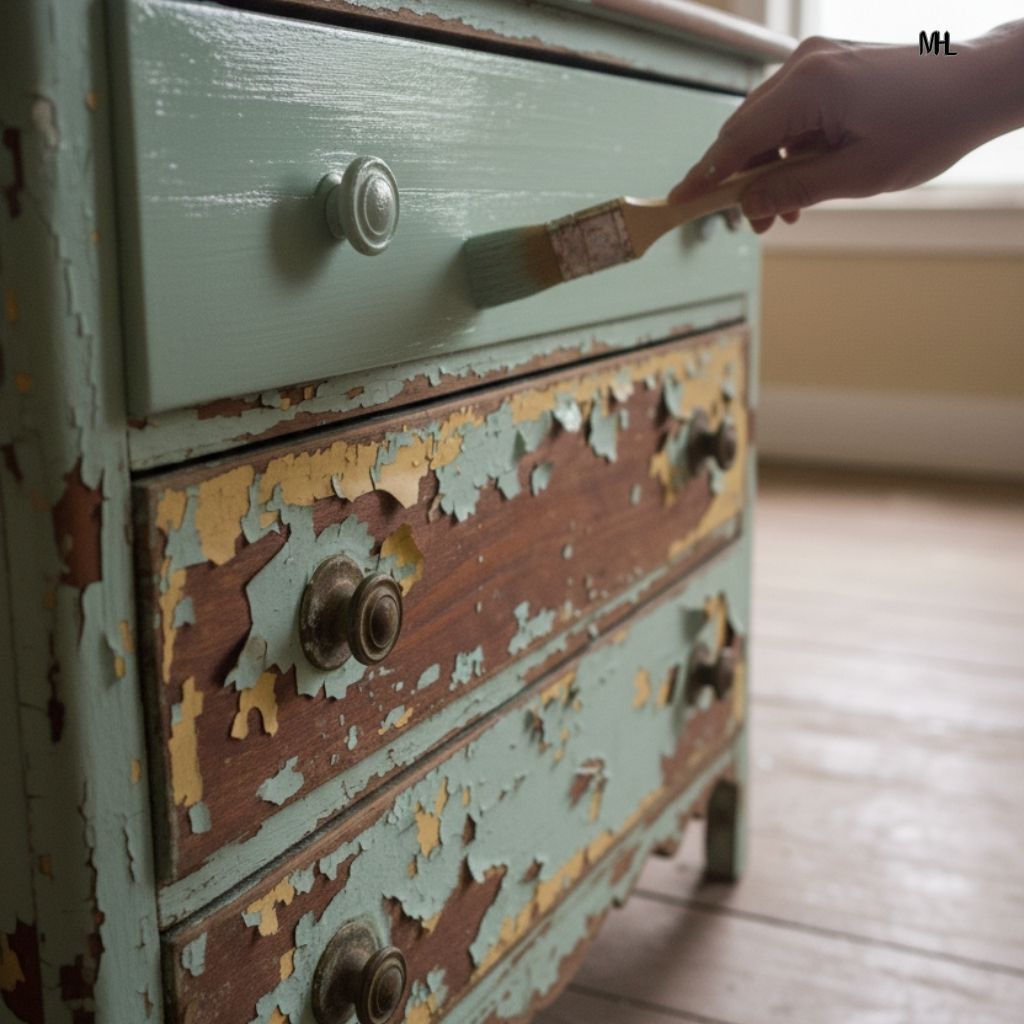
Step 6: Repaint Using Thin, Even Coats
When applying paint, focus on thin layers instead of trying to cover everything in one coat.
Use long, consistent strokes and avoid going back over areas that have already started to dry. This helps prevent uneven texture and new peeling issues.
Apply the first coat evenly, then let it dry completely before adding another layer.
Step 7: Build Coverage Gradually
Most surfaces require two to three thin coats for a smooth and durable finish.
Each additional layer should be applied only after the previous one has fully dried. This gradual build-up allows the paint to bond properly and reduces the risk of future peeling.
Step 8: Allow Proper Drying Time Before Use
After the final coat is applied, the furniture should be left to dry completely before being used.
Even if the surface feels dry to the touch, it may still need additional time to fully cure. Allowing this extra time helps the paint harden and improves long-term durability.
Why Skipping Surface Prep Almost Always Leads to Peeling
It’s easy to underestimate how important preparation is, especially when the surface looks clean at first glance.
However, paint needs a slightly rough and stable surface to adhere properly. Without sanding, glossy or sealed surfaces remain too smooth, making it difficult for paint to grip.
Cleaning is just as important. Even small amounts of grease or dust can weaken adhesion, leading to peeling later on. Preparation may feel like an extra step, but it’s what allows the paint to last.
A Better Way to Apply Paint So It Stays in Place
Once the surface is properly prepared, the way paint is applied also affects how well it holds.
Using thin coats allows the paint to settle evenly and bond more effectively. Thick layers may look faster, but they often create weak spots that can lift over time.
Applying paint in consistent strokes and avoiding overworking the surface helps maintain an even finish.
Allowing enough drying time between coats is another key factor. Rushing the process can trap moisture or create layers that don’t bond well together. A steady, patient approach produces a much stronger result.
Tools and Materials That Help Paint Stick Better
The right tools and materials can improve how well paint adheres to furniture.
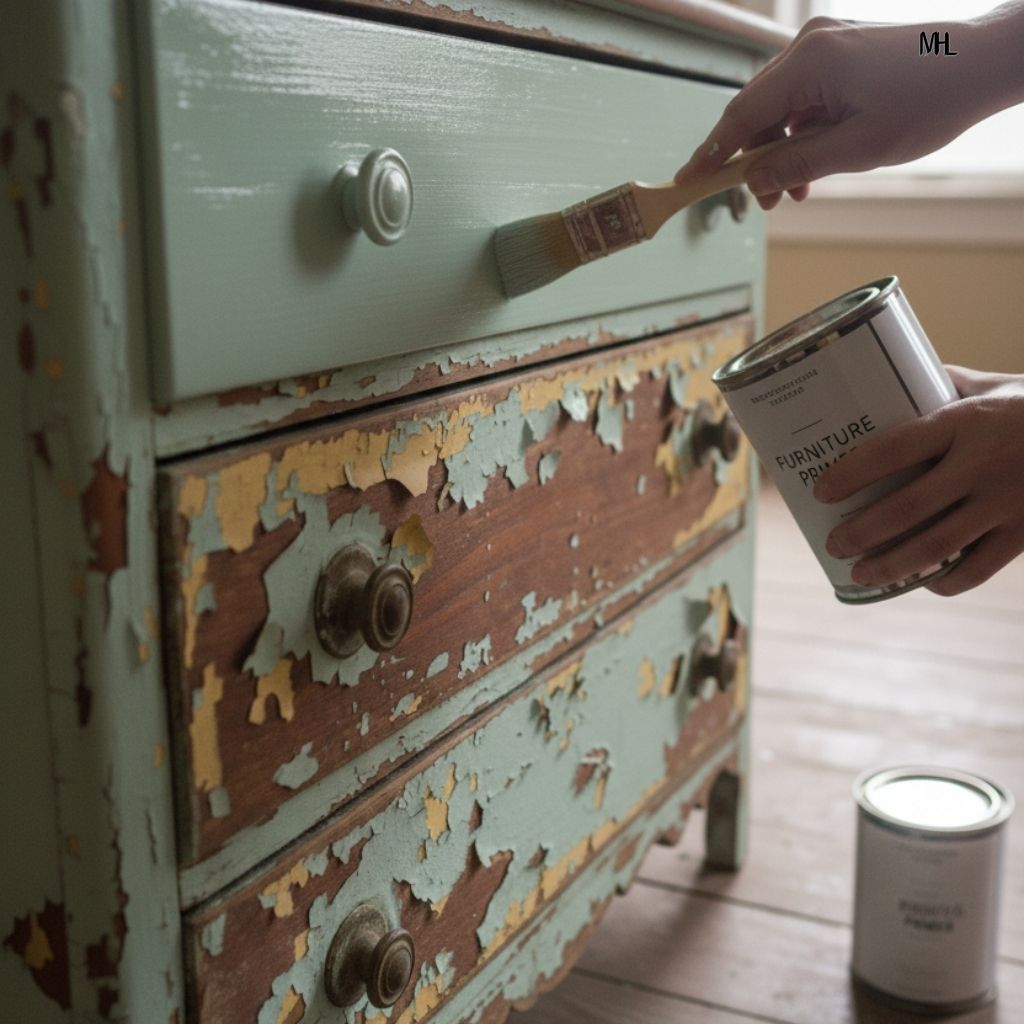
Fine-grit sandpaper helps create the texture needed for better bonding. A good primer provides a base that supports the paint and improves durability.
Soft, high-quality brushes or foam rollers help apply paint evenly, which reduces the risk of weak spots.
Using compatible products together, such as primer and paint designed for furniture, also helps create a more stable finish.
Common Mistakes That Cause Paint to Peel
Peeling paint often comes from a few repeated mistakes. Painting over a dirty or glossy surface is one of the most common issues. Without proper preparation, the paint has nothing to hold onto.
Applying thick coats can also lead to peeling, as the paint may dry unevenly or fail to bond fully. Skipping primer on certain surfaces makes it harder for paint to adhere, especially on sealed or previously finished furniture.
Rushing between coats can weaken the overall structure of the paint layers. Avoiding these mistakes makes a noticeable difference in the final result.
When It’s Worth Fixing vs Starting Over
In some situations, peeling paint can be fixed with simple touch-ups and repainting.
However, if large areas are peeling or the surface feels unstable, starting over may be the better option. Removing the existing paint and preparing the surface again can save time and produce a more reliable finish.
Knowing when to restart helps prevent repeated problems.
FAQs
Why does paint peel off furniture so easily?
Paint usually peels when it doesn’t bond properly to the surface, often due to poor preparation or incompatible materials.
Do I always need to sand before painting?
Sanding is recommended in most cases because it helps the paint adhere more effectively.
Can I paint over peeling paint?
It’s better to remove peeling areas first, as painting over them will not solve the underlying problem.
Does primer really make a difference?
Primer improves adhesion and helps create a more durable finish, especially on smooth or sealed surfaces.
Related Articles
- How to Fix Streaky Paint on Furniture (Step-by-Step Guide)
- How to Choose the Right Paint Finish for Furniture
- How to Make Old Furniture Look New Without Replacing It
Final Thought
Peeling paint is rarely about the paint itself. It usually comes down to how the surface was prepared and how the paint was applied.
Once those steps are handled properly, the result becomes much more durable and reliable. A little more attention at the beginning can prevent the need to fix the same problem later.